
It is time to start painting again….
I’ve got my reference books out of storage after ten years – they are on some new shelves in a new room – suddenly the world feels better again after all the struggles.
It is time to start painting again….
I’ve got my reference books out of storage after ten years – they are on some new shelves in a new room – suddenly the world feels better again after all the struggles.

£39.99 Free UK Post, International sale. Vintage Liberty Bass Neck in used condition. I have used this neck in a Fender #Squier #PBass body for live gigs. 61.5mm at heel / 27mm deep. #jazzbass #bassplayer https://ebay.us/8KvWui

£14.99 free UK post, International via eBay. Vintage F Spaced Humbucking Pickup. This pickup was fitted and removed from a 1990s Les Paul type guitar. Fully working, sounds good, would sound perfect in a HSS Stratocaster. https://ebay.us/YSpqas #humbucker #lespaul #epiphone

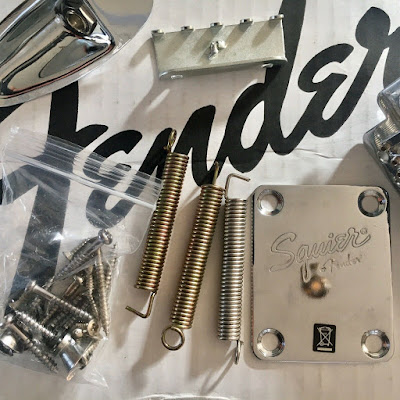
£13.99 UK Free Postage, international by eBay. Fender Squier Engraved Neck Plate. Stratocaster Parts, included are: tremolo unit, claw, bridge saddles, adjusters, springs, rear tremolo cover, jack plug socket and boat, screws. https://ebay.us/ZArcxh #squier #stratocaster #fender
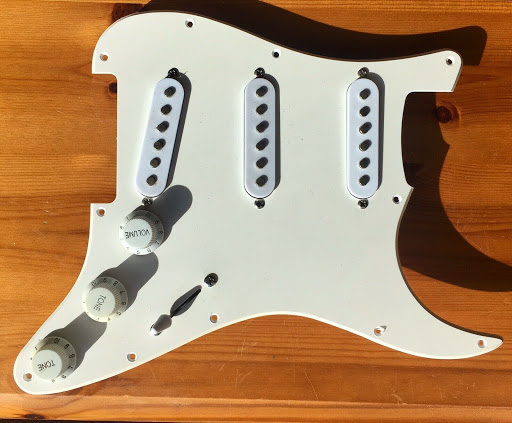
£19.99 Free UK post, international via eBay. Fender Squier Aged White Fully Loaded Scratchplate, Back Plate and Fixing Screws – Pickups, switch, knobs, and switch tip included, 11 hole single ply, fully working https://ebay.us/J4OAuB #stratocaster #squier #fender #vintageguitar
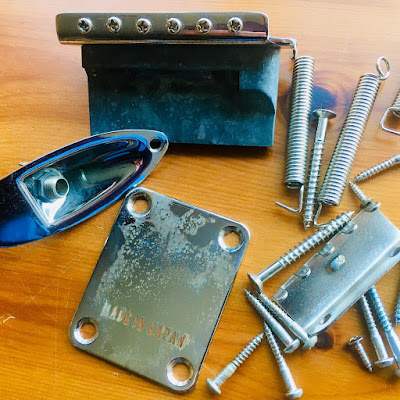
£13.75 Free UK postage, international sales by eBay. Made In Japan Engraved Neckplate, 5mm tremolo unit, Jack plug and boat, springs and fixings. Parts are used and come from various guitars – ideal for a vintage Japanese relic build. https://ebay.us/CKzCRg #madeinjapan #stratocaster #relicguitars #vintageguitars
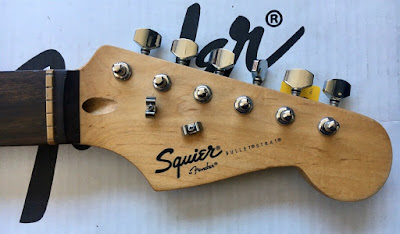
£35.00 Free UK post – International sale via eBay – 21 fret neck off a 2011 Jack Daniels Fender Squier Stratocaster by AXL. In great condition with virtually no wear to the frets, loaded with original machine heads. https://ebay.us/682PXJ #jackdaniels #squier #fender
Free UK postage and packing This neck is in fantastic shape with minimal signs of ware through use and is a beautiful mellow…


It’s party time ???? ? …but only 3 pints for us before playing (apparently that’s the rule?!). Support act Brieya May – Everyone Welcome…
Here is a video clip of us playing at Kings Nympton Village Hall on the 4th February 2017. We had a great time and the audience were brilliant. We have more gigs lined up for 2017.
3 Pint Rule – We Can Be Heroes
We can be ‘Heroes’… ?
Posted by Three Pint Rule on Monday, February 13, 2017
 Free Downloads
The History of This Window – This Window (UK) was formed by Peter Bright around 1985; earlier tape experiments exist from 1979 to 1984. These tape experiments formed the basic philosophy of This Window. The analogue tape machine became the main instrument used to create ‘songs’. This interest in experimentation had been nurtured whilst being a member of the Exeter College of Art and Design bands, T.34 (1978 – 1980) and The Urge (1979). The Urge supported Adam and the Ants and Bauhaus and were offered a record contract with 4AD but decided to split up and consequently didn’t sign. In A Glass Darkly (1981) was a project with the lead singer from The Urge, Russell Young and two ballet dancers who performed to a tape backing track of a dripping tap, only a handful of gigs were played in London. This project ended and Peter later joined Finish The Story (1981 -1986) as guitarist. Read more…